Ask three people whether King Arthur is a myth and you will get four answers. He is a myth, a legend, a folk hero, a bit of both, or a French import depending on who is doing the talking. The confusion is not silly — the categories genuinely overlap — but they are not interchangeable either, and knowing where the lines fall makes you a far better reader of old stories.
Here is the working vocabulary, with British examples, so you can place a tale correctly the next time you meet one.
The three categories in one breath
Myths are sacred stories about gods, origins and the shape of the world. They are set before ordinary time — "in the beginning", "when the world was young" — and they explain why things are as they are: why we die, why the seasons turn, why that hill has a hollow in it.
Legends are stories about people. They have a name, a place and often a rough date. They are told as though they might have happened, even when the evidence is thin, and they usually carry a moral or a claim about a family, a town or a nation.
Folklore is the big, untidy cupboard everything else lives in: customs, superstitions, songs, rhymes, dances, fairy tales and the small beliefs people absorb without ever being taught them.
Worth knowing: folklorists use folklore as an umbrella term that covers myth and legend too. A story can therefore be folklore and a legend at once. These labels describe what a story is doing, not which shelf it must sit on forever.
Myths: gods, origins and sacred time
British and Irish myth is not short of examples. Geoffrey of Monmouth's twelfth-century History of the Kings of Britain opens with Brutus of Troy, a refugee prince who sails to Albion, wipes out the giants living there and founds a kingdom. The story stuck because it gave Britain a classical pedigree. In the same book, Merlin dismantles Stonehenge in Ireland and rebuilds it on Salisbury Plain.
The Welsh tales collected as the Mabinogion work the same way: gods reduced to kings, magic that reshapes the land, a hero born of a woman made of flowers. Irish myth gives us Cú Chulainn, who defends Ulster more or less single-handed, and the Tuatha Dé Danann, who arrive in a cloud and later retreat underground.
Notice what these stories share. They are not much concerned with ordinary human life. They explain where a people came from and why the land behaves as it does.
Quick markers of a myth
- Gods, demigods or founding ancestors as main characters
- A setting outside normal history — "in the old days", "before the flood"
- An explanatory job: the origin of a place, a custom, a name
- Sacred weight; it belongs to a religion or belief system
Legends: history with the edges rubbed off
Legends sit closer to the ground. Robin Hood is the classic case: rhymes about him are being referred to by the fourteenth century, but no court record or chronicle settles whether a real man lies behind the name. That uncertainty is the point. A legend insists it is true without ever quite proving it.
Lady Godiva rides through Coventry, the Lambton Worm terrorises County Durham, King Canute orders the tide back to shame his flattering courtiers. Each story has a named person, a real place and a lesson attached. Each has been reshaped repeatedly by the people telling it.
Legends also do local work. They give a town a story, a family a founder, a rebellion a hero. When you find a tale fiercely attached to one valley, one bridge or one standing stone, you are usually looking at a legend.
Quick markers of a legend
- A named human at the centre
- A specific place, and often a rough period in history
- A moral, political or patriotic purpose
- Told as possible rather than as doctrine
Folklore: the wide, untidy category
Folklore covers the stories that belong to nobody in particular. The boggart in the Lancashire farmhouse, Black Shuck on the Norfolk roads, fairy rings, changelings, the first-footer at Hogmanay, the Derbyshire wells dressed with flowers each summer — these are beliefs and practices as much as narratives, and they survive because ordinary people pass them on.
Folktales sit here too: Jack and the Beanstalk, Catskin, Mr Fox. They have no fixed date, no real geography and no gods, and they usually end in a marriage or a fortune. A fairy tale is simply one kind of folktale, and "once upon a time" is the giveaway.
Urban legends are folklore as well. The phantom hitchhiker, the escaped animal spotted on the bypass, the friend-of-a-friend story that happened to someone's cousin: modern setting, same machinery.
Where the lines genuinely blur
Arthur refuses to sit still. He appears in ninth-century chronicles as a war leader, becomes a king in Geoffrey of Monmouth, gains a round table and a doomed love affair from later French romance, and turns up in folk belief as a sleeping lord beneath a hill. Myth, legend and folklore all have a claim on him. The same is true of the Loch Ness Monster, the Giant's Causeway and the devil's many supposed footprints across the British landscape.
Stories also migrate. A myth about a god can shrink into a legend about a king, then into a fireside tale with the names worn off. Old religion becomes local story; local story becomes children's bedtime reading.
A quick test for classifying a story
When you meet an unfamiliar tale, run it through these questions in order.
- Are gods, creation or the origins of a people involved? Call it a myth.
- Is there a named human, a real place and an apparent historical setting? Call it a legend.
- Is it a custom, a belief, a rhyme, or a tale with no fixed time or place? Call it folklore.
- Does the story claim sacred authority, or merely a good source down the pub? That usually settles myth against legend.
- Still unsure? Say which parts fit which label. "A legend with mythic elements" is a perfectly respectable answer.
Using the labels well
The point of these categories is not to police stories but to notice what they are doing. If a tale explains the world and carries religious weight, call it a myth and readers will follow you. If it hangs on a hero and a place, legend is the right word. For everything else — the rhymes, the customs, the beast on the road at midnight — folklore is broad enough to hold it.
And when a story refuses to fit, resist the urge to force it. Robin Hood, Arthur and Nessie have been argued over for centuries by people with more time and better archives than either of us. The overlap is not a flaw in the system. It is usually a sign that you have found a story that mattered to a great many people for a very long time.
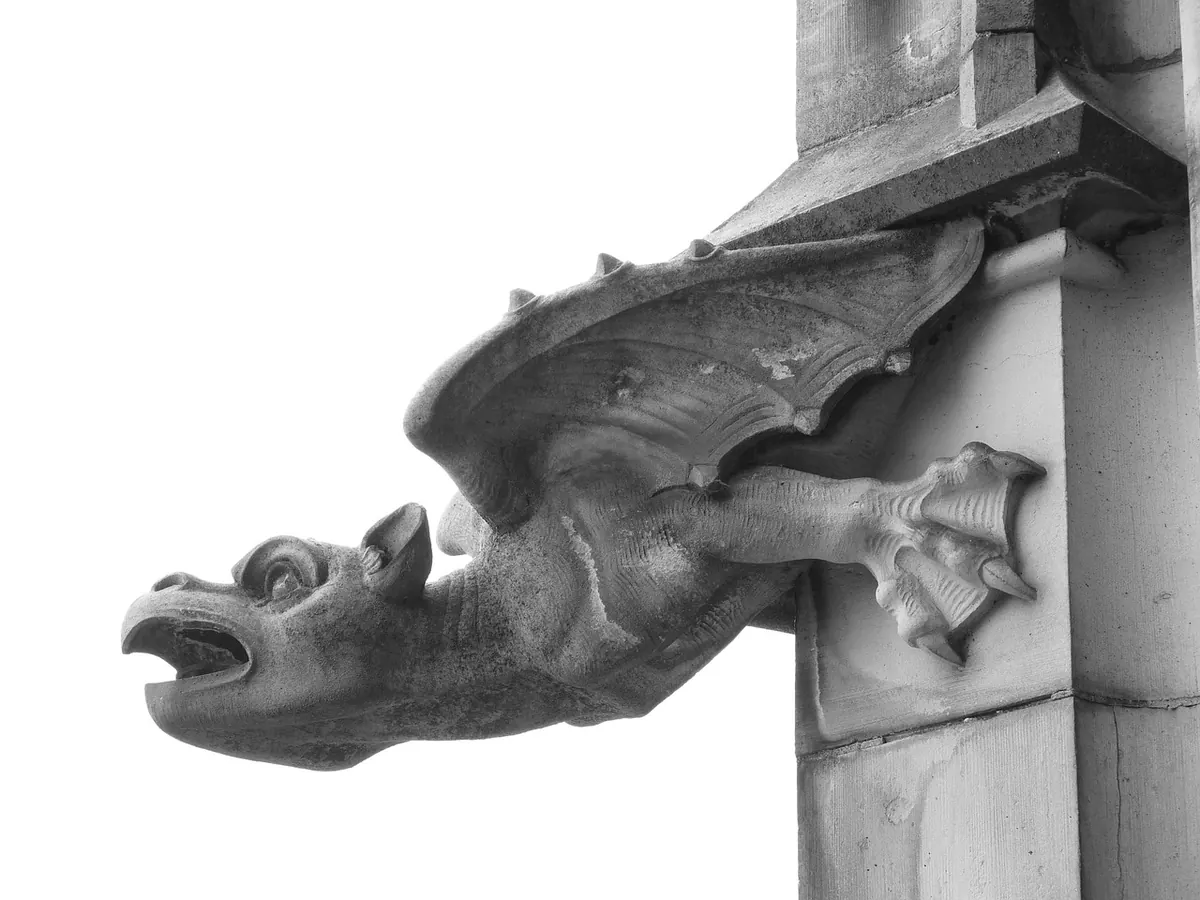
Photo: Lolame / Pixabay