Britain has more dragons per square mile than almost anywhere else in Europe — but they are not the fire-breathing imports of films and fantasy novels. They are worms and wyverns, bound to particular hills, wells and ponds, and usually carrying a family curse, a local grievance or a moral about broken promises.
This is a beginner's tour: what the words mean, the legends worth knowing first, and how to read serpent folklore when you are standing in the middle of it.
What counts as a worm?
Start with vocabulary, because it changes what you are looking at.
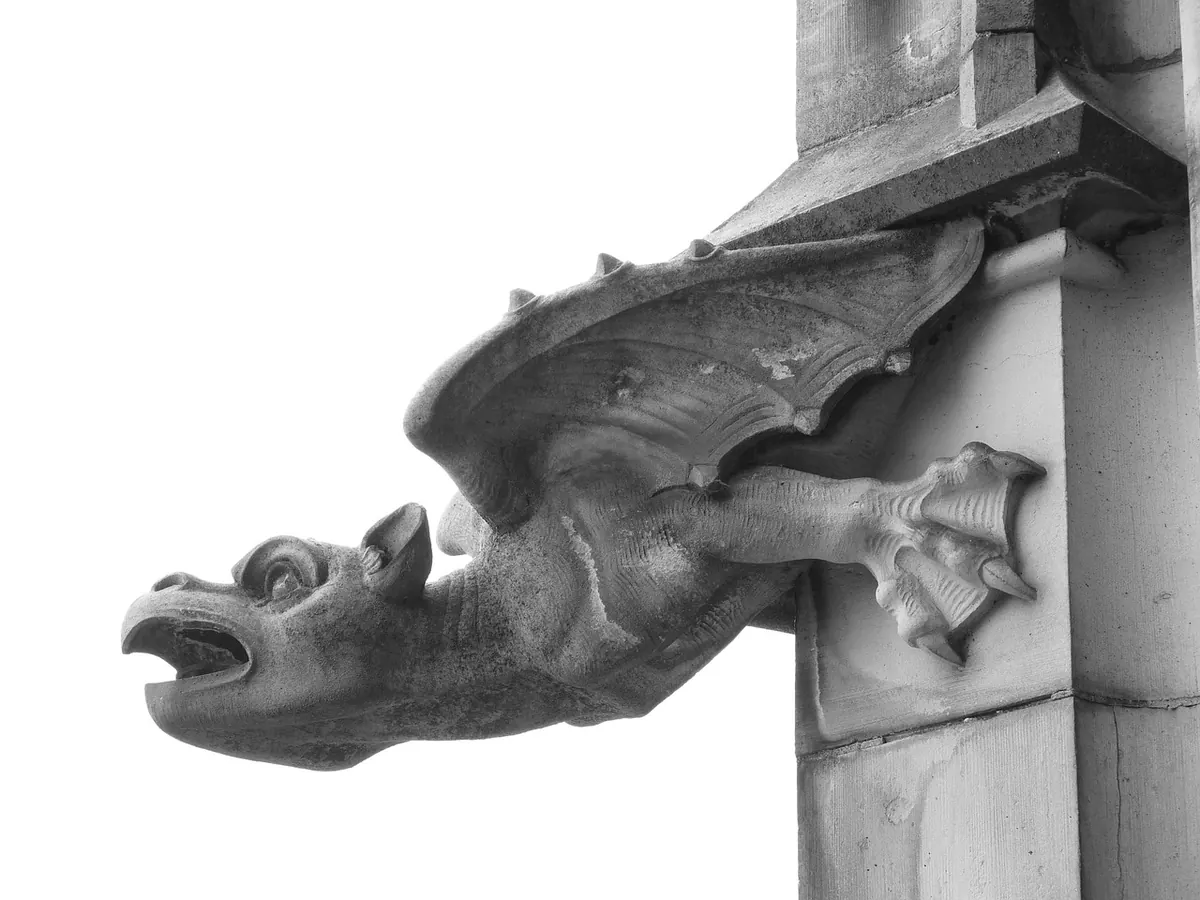
A worm in British folklore is not an earthworm. The word comes from Old English wyrm and Old Norse ormr, both meaning serpent or dragon. A worm is legless or nearly so, usually enormous, and at home in water, wells and hillsides. A dragon is the broader term, covering a four-legged, winged beast as easily as a coiled serpent. A wyvern has two legs, two wings and a barbed tail, and is the standard dragon of English heraldry. A drake is simply an older word for dragon.
Place names are the quickest shortcut. Wormhill in Derbyshire, Wormington in Gloucestershire and Worm's Head on Gower all carry the serpent in their names. Great Orme near Llandudno comes from the Norse ormr: the headland was thought to look like a sea serpent.
The Lambton Worm
The best-known worm in Britain belongs to County Durham. John Lambton, the young heir of Lambton, skipped church one Sunday to fish the River Wear. What he hooked was a strange, eel-like creature. He dropped it down a well and went off to the Crusades.
The worm did not stay small. It grew, left the well and coiled around Penshaw Hill, drinking the milk of nine cows at a sitting and taking livestock and children. Milk offered to placate it only made it larger.
When John came home, a wise woman told him what to do: fit your armour with spikes, fight the worm in the river where it cannot wrap itself around you, and when it is dead, kill the first living thing you meet. He managed the first two. His father ran out to greet him, too quick to stop, and John could not kill his own father. Nine generations of Lambton men were said never to die in their beds.
Seeing the Lambton Worm
The story is easiest to meet at Wallington Hall in Northumberland, where William Bell Scott's painting of the worm hangs in the central hall. Penshaw Hill, now crowned by the Penshaw Monument, still carries the claim that its ridges are the worm's coils.
Wyverns, heraldry and church walls
To find dragons rather than read about them, look up. Wyverns sit on coats of arms, pub signs and shopfronts across the country. A golden wyvern is often claimed as an emblem of Wessex, though the link is a later invention, and Leicester's arms carry one too.
The richest hunting ground is the parish church, where medieval carvers put dragons on fonts, roof bosses, misericords and doorways. They usually stand for the devil or sin being trampled by a saint. Start with the north door and the font: both were places where the devil was thought to lurk, and both were decorated accordingly.
Wales: the red dragon, the gwiber and the afanc
The most famous dragon in Britain is on a flag. Y Ddraig Goch, the red dragon of Wales, comes from a story older than the flag. At Dinas Emrys in Snowdonia the fortress of Vortigern kept collapsing, until a boy — later identified with Myrddin, or Merlin — explained that a pool lay beneath the foundations and in it two serpents fought. The red dragon won, and came to stand for the Britons; the white stood for the Saxons.
The gwiber is Wales's own winged serpent, a creature of pools, rivers and woodland, dangerous enough that stories about killing one involve cunning as much as strength. The afanc is a different animal: a lake dweller, sometimes described as crocodile-like, lured out of Llyn Barfog in one popular telling with the help of a maiden and hauled away by oxen.
Scotland: worms, beithirs and one famous loch
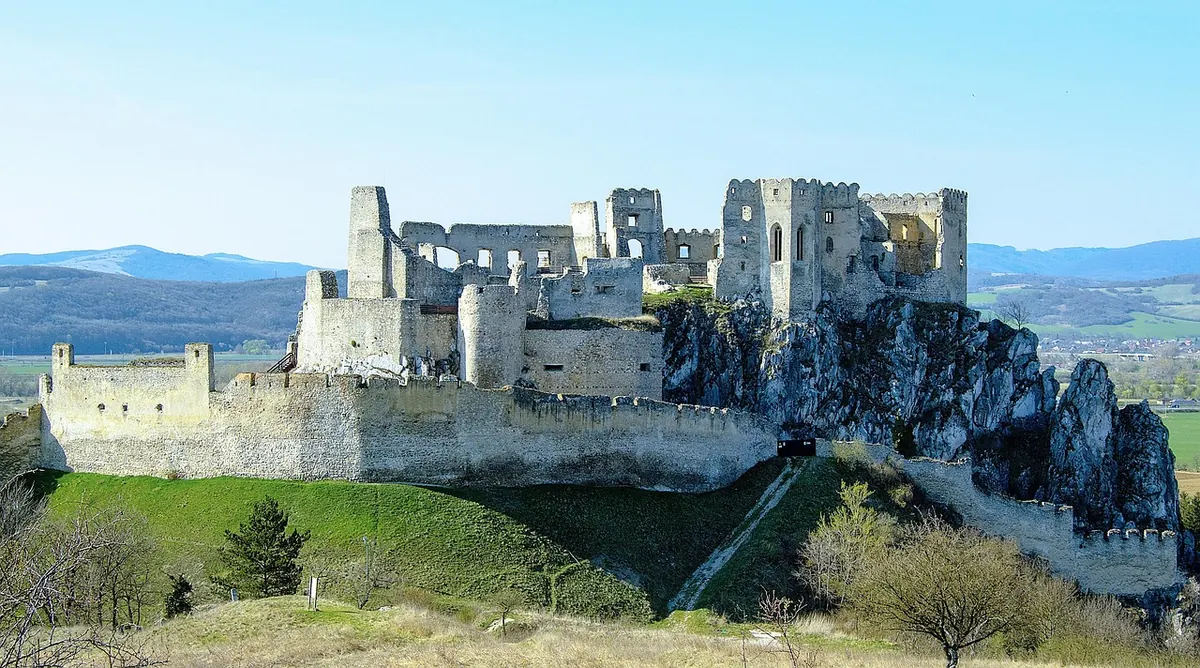
In Roxburghshire, the Linton Worm lay in a hollow on Linton Hill and made the neighbourhood unliveable. Tradition credits William de Somerville with killing it, either by riding at it with a spiked wheel fixed to his lance or by rolling burning peat into its lair. The family arms carried a dragon afterwards.
Gaelic tradition has the beithir, a great serpent rather than a winged dragon, said to haunt lochs and lonely ground. Not every Scottish serpent is a monster to be slain; some are warnings about where not to go.
Worth saying plainly, too: the Loch Ness Monster as we know it belongs to the 1930s. Older Highland water-horse tales involve a different creature with different rules, and reading Nessie back into medieval serpent lore is a modern habit.
Four regional serpents worth knowing next
- The Laidly Worm of Spindleston Heugh, Northumberland. A princess is turned into a hideous worm by her stepmother. Her brother Childe Wynd returns from exile and breaks the spell with a kiss. Laidly means loathly: foul to look at.
- The Dragon of Wantley, Yorkshire. A ballad dragon that eats its way through the parish, and is killed by a blow to its one unarmoured spot. It reads more like satire on lawyers and landowners than a monster story.
- The Mordiford Dragon, Herefordshire. Raised from a tiny creature by a girl called Maud in the usual telling, it grows into a menace and is killed by a man waiting in a cider barrel by the River Lugg. A dragon has long been painted on the village pub sign.
- The Lyminster Knucker, Sussex. A knucker takes its name from the Old English nicor, a water monster. This one lived in a pond said to be bottomless. Some versions kill it with a knight's spear; others, memorably, with a poisoned pie.
How to read a dragon legend on the ground
Start with the name on the map, then find the odd feature: the spring, the hollow, the ridge-backed hill, the pond nobody can plumb. Legends stick to specific places, and the stranger the feature, the stronger the story.
Then read the church and the big house. Carved dragons belong to a faith that saw the devil in them; heraldic dragons belong to a family that wanted a worm-slayer in its ancestry.
Watch for the recurring ingredients: a tribute of milk, spiked armour, a hidden position, a girl who raises or lures the beast, a promise broken at the last moment, a curse on a bloodline. Those are the joints of the story, and they survive even when the creature changes shape.
Treat the places well. Many of these legends are pinned to mounds, ruins and scheduled monuments. Look, photograph and follow local access signs. Do not dig, and do not shift stones to check whether a worm is sleeping underneath.
Photo: LoggaWiggler / Pixabay