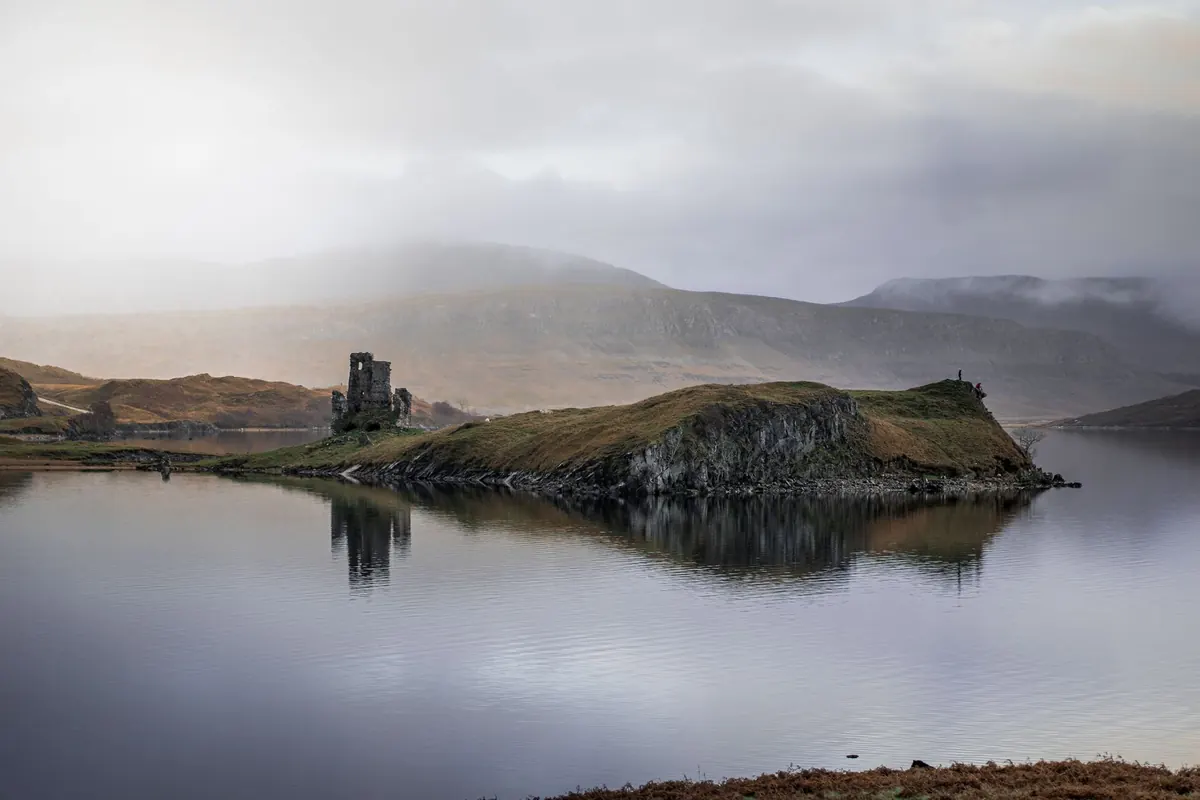
Loch Ness is 23 miles of cold, peat-black water running in a near-straight line across the Great Glen. It is more than 200 metres deep in places, and for the better part of a century it has been home to Britain's most famous monster. You do not have to believe in Nessie to enjoy the legend. It helps, though, to know where the story came from, what has actually been reported, and how to spend a day at the loch without feeling short-changed.
A Loch Built for a Mystery
Loch Ness is long and narrow: roughly 23 miles (37 km) from end to end, but barely a mile and a half across. That shape is why it reads as a river of standing water rather than a friendly, round lake, and why the far shore always looks closer than it is. By volume it is the largest body of fresh water in Britain, holding more than every lake in England and Wales put together.
The water is stained brown by peat, like weak tea, which limits how far you can see beneath the surface to a few metres at best. Anything large down there is effectively invisible from a boat, never mind from the road. Add a bottom that drops to depths no diver can safely reach for long, and you have a place where a mystery can survive almost indefinitely.
Before Nessie: Columba and the First Beast
The earliest written account has nothing to do with the loch itself. In the life of St Columba, written by Adomnán in the seventh century, the saint is travelling through the Great Glen when he learns that a man has been attacked in the River Ness by a water beast. Columba sends a follower to swim across, the creature rises, and the saint drives it back with the sign of the cross.
It is a fine story, and it is generally read as a miracle tale rather than a field report. Note, too, that it happens in the river, in the sixth century, and that nothing much follows it for the next 1,300 years. Travellers and mapmakers occasionally mentioned enormous fish or strange disturbances in Loch Ness, but nothing that would build a legend on its own.
1933: The Year the Story Went Global
Modern Nessie begins on 2 May 1933, when the Inverness Courier printed an account from Aldie Mackay, who managed a hotel in Drumnadrochit, describing something whale-like in the water near the village. The word "monster" appeared in print, and the story spread quickly. Timing helped: in the same year a new road along the north shore — the present A82 — put passing motorists directly above the water for the first time. More eyes on the loch meant more reports.
The Daily Mail sent the explorer and showman Marmaduke Wetherell to investigate. He duly found large footprints on the shore, which were photographed and printed. Then the Natural History Museum looked at them and identified the prints as those of a hippopotamus foot. They had been made with an umbrella stand. It set the tone for much of what followed.
The surgeon's photograph
In 1934 a photograph appeared in the Daily Mail showing a small head on a long neck above the water, supposedly taken by a London surgeon, R. K. Wilson. It became the image of Nessie: the silhouette most people still picture. Sixty years later, in 1994, a man named Christian Spurling said the picture had been a hoax built around a toy submarine and modelling material, arranged by his stepfather — Wetherell again. Most researchers now treat it as a fake, though it still turns up on tea towels and postcards.
So What Might People Be Seeing?
A long list of ordinary things can look extraordinary on a big, dark, moving loch. Among the more plausible explanations:
- Boat wakes and wind, which travel for miles in a narrow glen and can lift into shapes that seem to move against the current.
- Otters and seals. Otters are common; seals occasionally come up the River Ness from the sea. A head and neck at distance is easy to misjudge.
- Swimming deer. Red deer do cross the loch, and a stag swimming in poor light is a genuinely unsettling sight.
- Birds. A line of cormorants or geese can read as a row of humps breaking the surface.
- Fish and eels. Salmon, trout, Arctic char, pike and eels all live here, and a rolling salmon makes a surprising splash.
- Logs. Bog pine floats, drifts and rolls, and the loch is not short of it.
- Waves from below. Small earth tremors can set the whole loch rocking, sending surges down the shore with no wind behind them.
- Hoaxes. From carved footprints to doctored photographs, some of the best-known evidence was made to order.
There is also a biological problem. A breeding population of large animals needs dozens of individuals, a reliable food supply and, eventually, remains. Loch Ness is cold, deep and nutrient-poor, and in ninety years of nets, sonar, cameras and divers, nothing has been recovered.
Sonar, DNA and Modern Nessie Hunting
The search has grown more scientific. In 1960 Tim Dinsdale filmed a hump moving across the water; the footage was studied for years, though later readings suggest a boat. In 1987 the Operation Deepscan survey ran a line of boats across the loch with sonar, and logged contacts it could not identify. In 2018 a team led by the University of Otago took environmental DNA samples from the water and found no trace of reptile DNA, but plenty of eel DNA — which neither proves nor disproves a very large eel.
None of this has settled anything, and that is part of the appeal. Sightings are still logged, webcams still run, and each summer someone reports a disturbance near Urquhart Castle.
Visiting Loch Ness: Practical Tips
- Base yourself sensibly. Inverness, Drumnadrochit and Fort Augustus all make good starting points. Dores, at the north-east end, is quieter and has a fine beach.
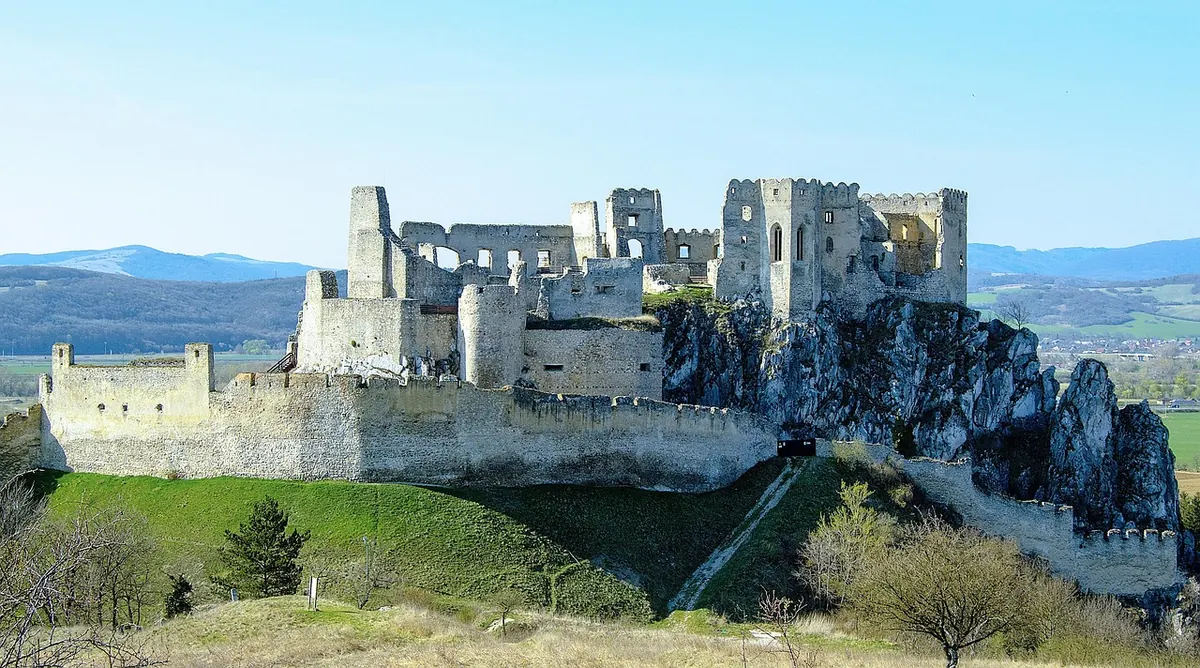
- Urquhart Castle gives the classic view over the deepest part of the loch. It is ticketed and busy in summer; go early or late in the day.
- The Loch Ness Centre in Drumnadrochit walks you through the story, the hoaxes and the science if the weather turns.
- Take a boat trip. Cruises leave from Inverness, Drumnadrochit and Fort Augustus; some carry sonar and underwater cameras, which is a good way to see how murky the water really is.
- Drive the quiet side. The A82 on the north shore is fast and often congested. The B862 on the south side is slower, narrower and far better for stopping.
- Pick your conditions. Still, overcast mornings are best. Wind and rain chop the surface until every ripple looks like a monster.
- Pack for it. Binoculars, waterproofs and midge repellent between June and August. The water stays cold all year, so swimming is for the hardy.
What to Take Away
You will almost certainly not see a monster. That is fine. The pleasure of Loch Ness is the place itself: the sheer scale of it, the ruined castle, the wooded shores, the sense of something enormous lying just out of view. Look for wakes, watch the birds, and keep a note of what you saw and when, because that is exactly how the legend has been kept alive for ninety years. Treat the stories with a healthy scepticism and the landscape with respect, and you will come home with something better than a photograph of a fake neck.
Photo: Clément Proust / Pexels